
Day 1 audit Menu intake First live shift
Your kitchen, on Toast, serving in days.
Audited on day one, menu rebuilt in a test kitchen, hardware staged and labelled, staff trained on a mock service, then we stand on the line with you for the first live shift.
- Single-location launch
- 5-7 days
- Menu build done in a test kitchen
- Day 2-3
- Hardware staged and labelled
- Day 4
- Train, then a mock service
- Day 5
Once hardware and menu files are in hand.
Modifiers, combos, happy hour and 86 logic rebuilt before they touch a live order.
Wi-Fi checked wherever a server taps to pay; offline mode walked through with managers.
Real tickets from fryer to expo before a paying guest ever arrives.
Six days, start to first live shift
The week below is the shape of a single-location switch. Every card is a real working day, not a phase label — the sequence is what you actually walk.
-
Day 1
Audit and menu intake
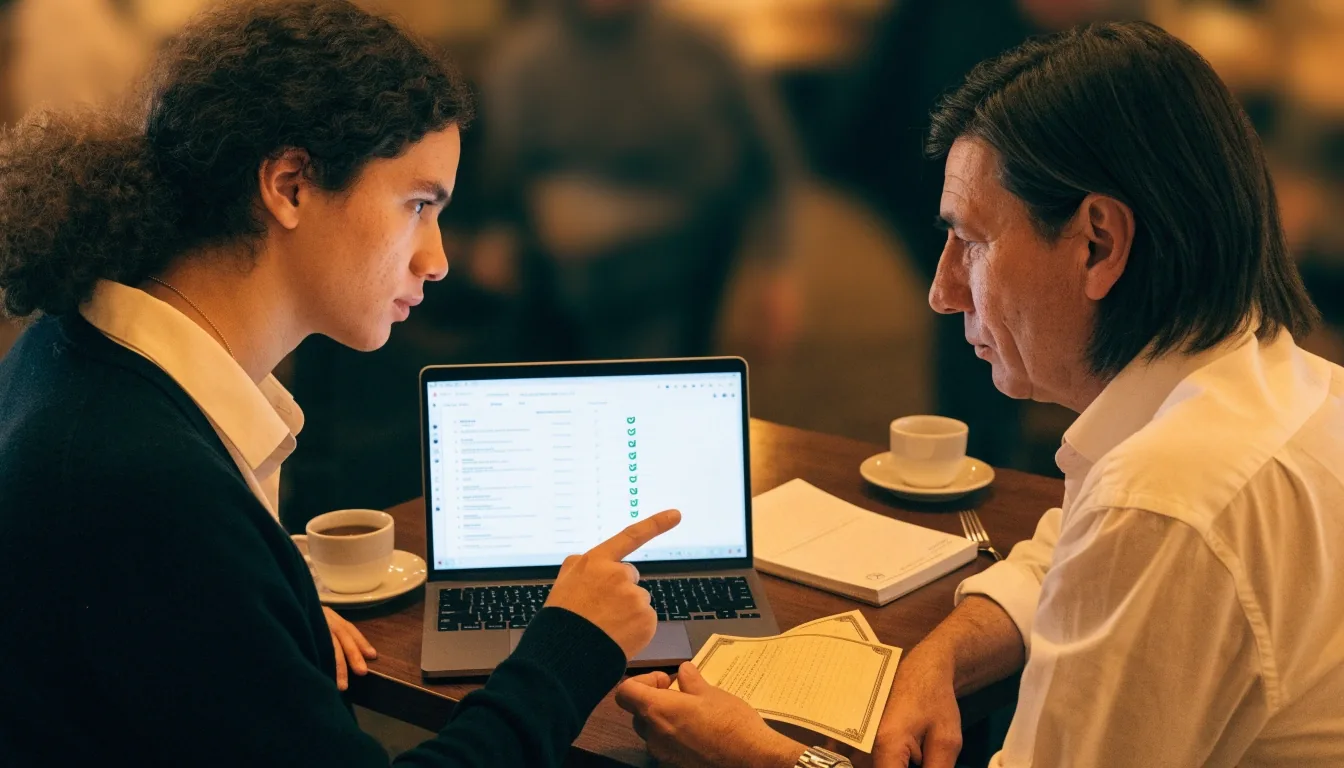
We collect your menu export, photos of modifier screens, tax rules, service charges and hours. Printers, drawers, network gear and payment contracts get written down. On paper or a legacy terminal, we work from printed menus and a floor sketch instead: you finish the day with a gap list and a hardware list.
-
Day 2-3
Build and payments
Menu migration happens in a test environment. Modifiers, combos, happy hour and 86 logic are rebuilt. Toast Payments is prepared with card, contactless, gift card, cash, split and EBT SNAP use cases reviewed per Toast materials. Tip prompts, refund permissions and PCI Compliance handling are set as part of the platform.
-
Day 4
Hardware staging
Terminals, handhelds, kitchen screens and readers are updated, labelled and tested. Wi-Fi coverage is checked at every corner where a server will tap to pay. Offline-mode behavior is demonstrated so managers know what continues during an outage. Cables, mounts and backup power are confirmed.
-
Day 5
Training and test service
Role-based training in short blocks. Then a mock service with real tickets from fryer to expo. Voids, comps, discounts and split payments are practised. Online orders are fired to the kitchen to confirm routing and prep-time display.
-
Day 6-7
Go-live and follow-up
We stay through first live shifts, on site in Miami or on call nationally. Ticket times, payment speed and tip flows are watched. After the weekend we fix naming, button placement and report favorites. Managers get a close-of-day checklist tied to Toast reporting.
-
Minimum viable switch
Six ways to pay for the day
Everyone has one day that eats the budget. We build the plan around yours: put off a low-traffic room, keep two stations on the old POS a week longer, or run the launch on a Tuesday instead of a Friday. Adjusting dates on day one usually beats forcing a launch on day seven.
The consultation
Before the week starts, a review
Before we promise a date, we look at what you're actually running. Send a menu export and a few photos of your modifier screens and we come back with a written review: which of the four delay risks below applies to you, what the menu build will take, and a realistic launch window. No payment contract gets signed before you've read it.
- Bring
- Menu export or printed menus, plus photos of modifier screens.
- Get back
- A written review with your launch window and any blockers flagged.
- Runs where
- Miami on site for the launch week, or remote on call nationally.
- Costs you a
- Short call. If we can't hit a real 5-7 day window, we tell you that day.
What can delay a week?
Four things come up again and again. We look for them on day one and tell you which apply to you before we lock a date — the answer is often a different launch day, not a longer project.
-
Missing menu data
Gaps in the export, unlisted modifiers, or a menu that only exists on paper. We can rebuild from print, but every page we can't read adds a day to the intake, not to the launch.
-
Locked payment contracts
If your processor has a term still running, we plan around the end of it rather than break it. Toast Payments gets staged before that date so the switch is a button, not a project.
-
Weak Wi-Fi in a corner
Handhelds need a signal at every table, not just at the host stand. We walk the floor with a phone on day one; the fix is usually one access point, but it needs to be shipped before day four.
-
Hardware backorders
A specific kiosk or reader can be on allocation. We build the day four staging list on day one, so you know which devices arrive and which stations run on what you already own.
Multi-location menus with different prices per site take their own review. It's not a delay — it's a different shape of project, and the weekly schedule above starts again per location. The dates we publish are for one location whose menu data is in hand.
The first live shift
The night it has to just work
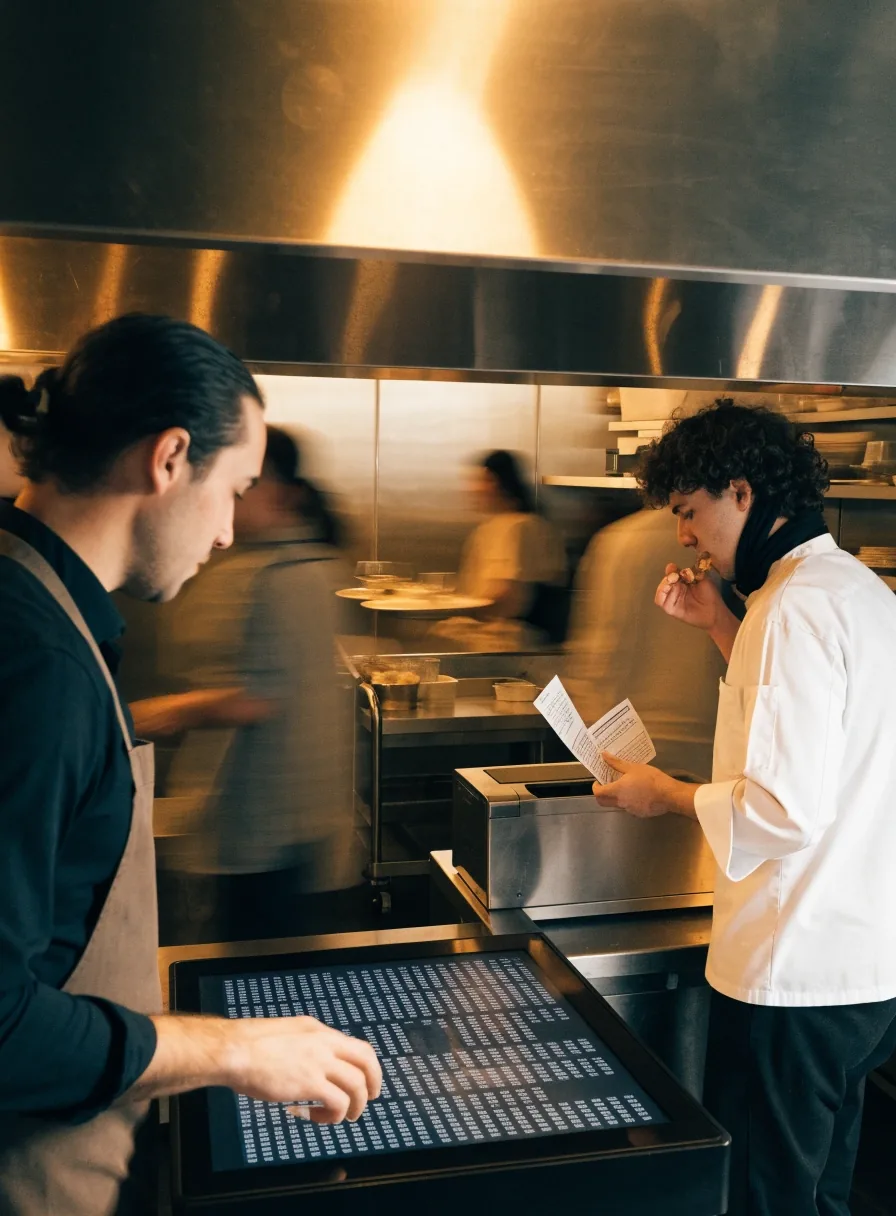
Cutover is scheduled between services, never mid-rush. On the first live shift one of us stands at the pass and watches: ticket times, payment speed, tip flow. The kitchen calls out like it always did — the difference is only what the tickets come from.
-
Ticket times watched against your old numbers
If the pass slows down, we find out that night, not on a report next month.
-
Payment and tip flow checked at the table
A server tapping to pay with a guest watching is not the moment to discover a weak signal.
-
Close-of-day checklist for managers
Tied to Toast reporting — what to check, where to look, and what to do if something looks off.
Common questions
The two things operators ask first
If your question isn't here, the fastest answer is a call. We know what a switch week actually asks of a kitchen, because we stand in one most weeks.
Ask us directlyHow long does a Toast rollout usually take?
Single sites often complete in 5-7 days once hardware and menu files are ready. Extra locations or complex menus add time. When we take the intake call, we tell you which side of that line your restaurant falls on before we book any days.
Do we close during the switch?
Usually no. Build happens in the background and cutover is scheduled between services. Your dining room runs on the old system until the minute you decide to flip, and we're there for the flip.
What about tips, split checks and gift cards?
Tip prompts, split payments, refund permissions and gift card handling are set up during the day 2-3 build, then practised in the day 5 mock service so your staff have run them on a real ticket before a real guest. Card, contactless, cash and EBT SNAP use cases are reviewed against what your restaurant actually runs.
Can you do the switch while the kitchen stays open?
Yes — that's how we work by default. Menu building, hardware staging and training all happen around service, and the only time the kitchen sees a change is the cutover itself. We schedule it between a lunch and a dinner, or after a Sunday close, so nobody is plating on an untested terminal.
Line ready
Ready to book your switch week?
Tell us the menu you're running today and the date you want Toast live. Most switches we take on begin with the same two questions: what are you on now, and when would this be easiest for your kitchen?
Where we work
- Studio
- 1200 Brickell Ave, Suite 1950, Miami, FL 33131
- Phone and hours
-
+1-305-555-0182
Monday to Friday, 9:00 AM - 6:00 PM - On site or on call
- On site across Miami for the launch week; remote on call nationally.