Toast Agent - Toast Restaurant Partner USA Toast Agent Restaurant Partner USA
An 8am back-of-house diner pass: stainless ledge, chewed ticket rail with hand-inked cards, one tablet face-down on the steel, warm lamp pools on cold brushed steel.

Menu rebuild · Online ordering · One database

Your menu, on toast, selling the same way twice.

Toast Agent rebuilds items, modifiers and combos inside your Toast POS, then feeds the same database to Toast Online Ordering so the dining room and the website never disagree.

Typical launch window
5–7 days

Menu build runs alongside hardware drop-off, so the rail is live before Friday's dinner service.

Migrated in one database
1 menu

In-house tickets and online orders read the same items, modifiers, hours and sold-out flags.

Where we are
Brickell, Miami

1200 Brickell Ave, Suite 1950 · reach the team

Intake → go-live

Five stations on the rail, one menu on the other side

Every restaurant we migrate walks the same five stations. Below is what happens at each one, in the order the work actually happens.

  1. Intake Day 1

    What we collect

    Menu exports, POS screenshots, printed menus, catering sheets, modifier lists, happy-hour rules and tax settings. We photograph your current buttons so staff find the new ones fast.

    Missing prices get flagged before build — not during dinner rush. For Miami Cuban cafes and bakeries with weight-based items, we confirm unit pricing early.

  2. Rebuild Day 2–3

    Modifiers and combos

    No-shows for modifiers cause kitchen remakes. We rebuild forced modifiers, nested options, upcharges and combo logic exactly.

    Sold-out flags, daypart prices and routing get tested. Grill items go to grill, cold items to pantry — expo sees clean, short ticket language.

  3. Taxes & hours Day 3

    Taxes, hours and dayparts

    Sales tax by location, dine-in versus takeout rules, service charges and delivery fees are set per U.S. local rules you provide.

    Breakfast, lunch and late-night menus switch on schedule. Holiday hours are entered once and reviewed with a manager — this prevents the classic error where online menus show lunch at midnight.

  4. Ordering Day 4–5

    Online ordering connection

    Toast markets its own first-party online ordering for direct sales without third-party commission fees. Its platform ties ordering to menu, hours and inventory updates.

    We connect ordering to your domain, set prep times, pickup shelves and confirmation texts. Toast Local, named in Spring 2026 release materials as a frictionless flow, informs how we simplify checkout steps.

  5. Go-live Day 6–7

    Testing before announce

    We fire test orders for pickup, large combos and sold-out items. Refunds and cancellations are practiced. Prep-time changes during rush are tested.

    Only after kitchen and expo approve do we link ordering on Google and your site header.

Swipe the rail · 5 stations on one ticket rail

Direct online sales

One menu feeds the dining room and the ordering page

Online guests cannot smell the food. We tighten names, short descriptions and photos for small screens — and order modifiers so phone thumbs do not mis-tap. Upsell prompts stay short and relevant. Staff learn how online tickets appear on the kitchen screen versus dine-in tickets, so expo reads one language all night.

Photos & descriptions
One shot per item, cropped for a phone, always paired with a name a guest can picture.
Modifier order
Most-chosen first, so the guest taps once and the kitchen reads the whole ticket.
Kitchen screen
Online tickets formatted to match the rail, not to invent a second workflow.
Pickup shelves
Labelled bays and prep-time texts that keep the counter clear during the lunch push.

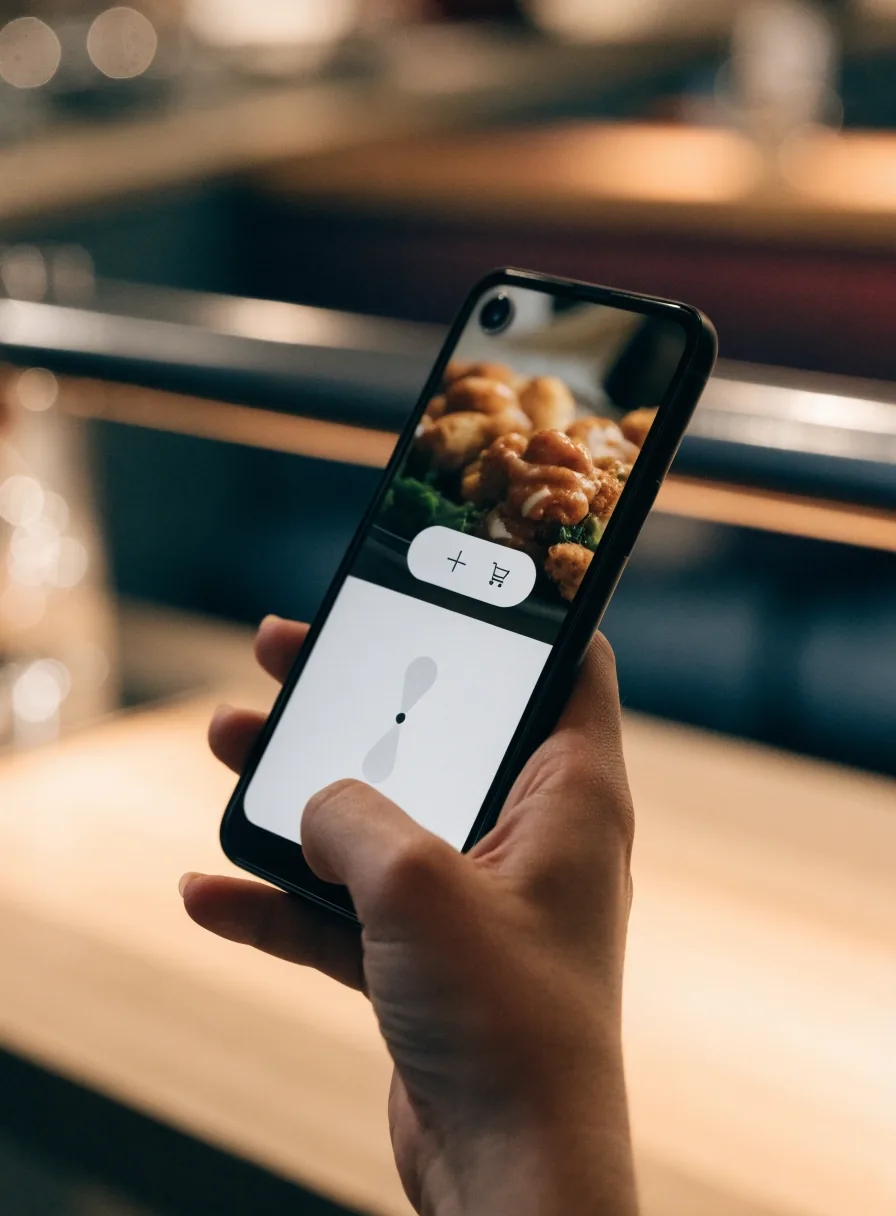
A smartphone held over a stainless counter, showing a glowing Toast online ordering page with a dish photo and pickup-time selector; a pickup shelf blurred behind.
One ordering flow for the crew: the same ticket language, the same modifier order, the same pickup shelf.

Rebuild detail

The parts of a menu that break the rail

A POS that loses a modifier mid-service is worse than one that starts slow. These are the four edges we cut before go-live — each is where a live ticket turns into a remake if the logic is wrong.

Forced & nested modifiers

Same rules as today: what must be chosen, what can be added, which sides swap for which, which upcharges stack.

Combos that compute

Deal pricing, substitutions and drink choices rebuilt to match the printed menu, then tested on live orders.

86 & sold-out behavior

When a dish runs out at 7pm on a Friday, in-house and online ordering both drop it — without a phone call from the counter.

Daypart prices

Breakfast, lunch and late-night pricing switch by the clock — and the online menu switches with them, not against them.

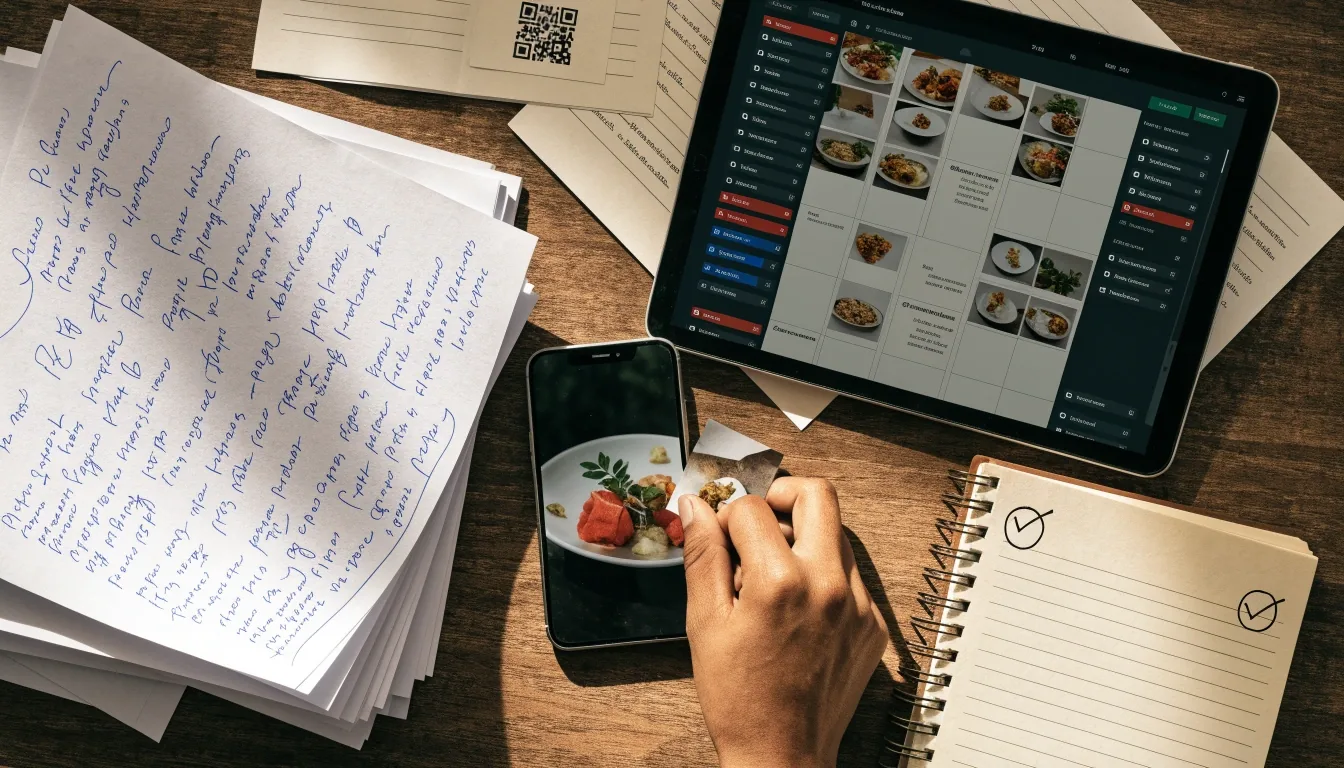
A stainless ledge during menu intake: a printed paper menu with handwritten notes, a tablet showing a menu editor, and a phone with a plated-dish photo being uploaded.
Intake at the pass: printed menus, POS screenshots, catering sheets and modifier lists collected before a single button is redrawn.

Rules the POS has to keep

Taxes, hours and dayparts set location by location

Sales tax by location, dine-in versus takeout rules, service charges and delivery fees are set per the U.S. local rules you provide. Breakfast, lunch and late-night menus switch on schedule. Holiday hours are entered once and reviewed with a manager.

Doing this before the go-live date is what stops the classic error where an online menu shows lunch at midnight, or where a takeout order is taxed at the wrong rate for the wrong seat.

  • Multi-location tax tables reviewed against the rules you supply.
  • Dine-in, takeout and delivery fee treatment kept consistent across channels.
  • Holiday and seasonal hours on one schedule, reviewed with a manager before launch.

Delivery, kept in one flow

One ticket flow for direct orders — marketplace kept separate

If you use delivery partners, we draw a clear line between what Toast direct ordering handles and where marketplace orders begin. Staff keep one flow for direct orders, and printer and screen routing stays consistent across both.

Reporting separates direct from marketplace sales, so a monthly review shows what changed once direct ordering went live — without mixing a Toast direct order into a marketplace report.

How we keep the two apart

Direct Toast orders
One queue, one kitchen screen, one printer route — the same flow the counter already knows.
Marketplace orders
Kept visually distinct on the screen so expo always knows which channel the ticket came from.
Reporting
Separated at the source, so month-end review does not have to untangle direct from marketplace.
Staff training
A short, written routing rule the whole crew can repeat — not a policy memo nobody reads.

After launch

Who edits the menu once the doors open?

Managers learn to add seasonal items, change prices and pause 86'd dishes. Permission levels prevent accidental tax edits, so the books a bookkeeper reconciles are never touched by a line cook. We leave a short video checklist and remain on call through the first menu change cycle — from a new special to a new modifier that a crew member asks for mid-service.

The goal is not to make you depend on us. It is to get you back to the pass.

Prefer a call? +1-305-555-0182 · Monday to Friday, 9:00 AM – 6:00 PM.

Two questions we get every week

How does Toast handle online ordering and menu updates?

One menu database feeds in-house and online ordering, with hours and inventory updates reflected together.

Will my modifiers transfer exactly?

We rebuild them to match your current logic and test edge cases like combos and upcharges before go-live.

Next step

Bring the menu. We hand you back a Toast POS that sells it twice.

Send us a PDF, a photo of the paper menu, or a POS export. We reply with a migration plan: what we need from you, what we rebuild, and when the rail goes live.

Toast Agent

1200 Brickell Ave, Suite 1950
Miami, FL 33131, USA

+1-305-555-0182
[email protected]